Sisters of Code Shares Youth Perspectives at UN Women Youth Dialogue

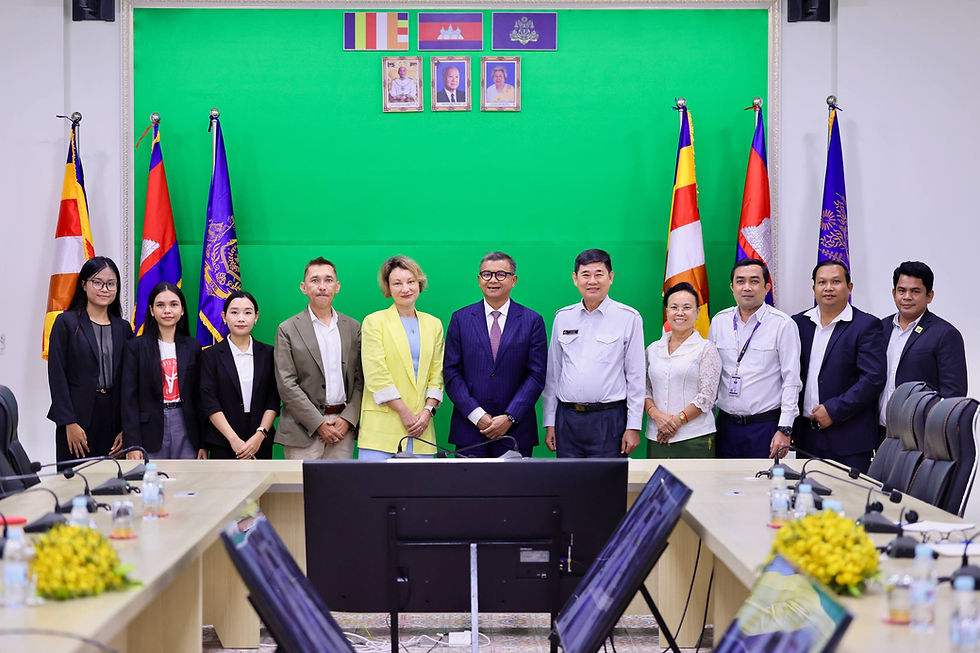
On 27 September 2026, Mrs. CHIN Dalin, Project Leader at Sisters of Code, was invited by UN Women Cambodia to share her experience working with young women in technology at the Youth Dialogue: “Empowering Youth for Women, Peace, and Security through Online Safety and Inclusive Digital Spaces.”
The dialogue was organized by UN Women Cambodia and co-designed with youth groups. It brought together 86 participants, including representatives from government ministries and public institutions, youth-led organizations, and UN agencies.
The dialogue focused on strengthening young people's awareness of the Women, Peace and Security (WPS) agenda, including emerging non-traditional security issues such as cybersecurity and climate security, promoting responsible online engagement, and highlighting the important role of youth in contributing to policy discussions.
H.E. Koung Sorita, Secretary of State at the Ministry of Women's Affairs Ms. Vladanka Andreeva, UN Resident Coordinator in Cambodia Ms. Bridget Collier, Deputy Head of Mission at the Australian Embassy in Cambodia

For Sisters of Code, the dialogue provided an important opportunity to bring young women's experiences into the conversation around digital safety and inclusion.
From digital access to digital confidence

Empowering young women in digital spaces means giving them not only access to technology, but also the skills and confidence to navigate it safely.
Sharing from her experience at Sisters of Code, Mrs. CHIN Dalin posed a simple but important question:
“If we teach a girl how to code, use AI, and build her own website, but never teach her how to protect the account where all her work is stored, can we really say that we have prepared her for the digital world?”
Since joining Sisters of Code in 2024, Mrs. CHIN Dalin has worked alongside the team to support girls and young women in developing digital and technology skills.
Sisters of Code provides free digital education and technology skills development for girls across Cambodia. Its programmes go beyond coding to include areas such as digital skills, artificial intelligence, online safety, teamwork, and leadership.
The goal is not only to help girls become technology users, but also to become digital creators and confident participants in the digital world.
However, as Sisters of Code continues working directly with young learners, one important lesson has become increasingly clear: Before young women can fully participate in the digital world, they also need to know how to protect themselves within it.
What are girls experiencing online?
To better understand these experiences, Sisters of Code conducted an online safety survey in September 2026 with 133 students, most of whom were between the ages of 10 and 20.
The survey is not intended to represent all Cambodian girls and young women, as Sisters of Code students are already an active group of technology users. Nevertheless, their responses provide valuable insight into the online experiences and concerns of young women participating in digital learning.
Most students reported using the internet every day, particularly for learning, communication, and social media.

At the same time, they are exposed to a range of online risks. The most frequently reported concerns were online scams and account theft or loss.

Even though online bullying and strangers contacting me are not in the top concerns by the Sisters of Code students, the findings still deserve the attention:
1 in 3 students reported experiencing or facing online bullying or harassment.
1 in 4 students said that strangers had contacted them online.
Only 10% reported that they had never experienced any of the listed online threats.

These findings highlight an important reality: being connected brings challenges and risks of online safety.
Continuous training and awareness building

The survey, which presented views of female students who are active digitally, showed that continuous efforts are required to update skills and awareness.
Only 6% gave themselves the highest confidence rating.

Meanwhile, 66% were not sure that they had sufficient skills to protect themselves online.
For Sisters of Code, this finding reinforces the importance of combining digital inclusion with practical online safety education.
Young people need more than general awareness. They need practical skills that they can apply in their everyday digital lives, including how to:
Create strong and secure passwords.
Recognize scams and suspicious messages.
Respond when an account is hacked or compromised.
Protect personal information and privacy.
Report online bullying and abuse.
Seek support when facing online threats rather than dealing with them alone.
These skills are essential for helping young people participate in digital spaces with greater confidence and awareness.
Online safety is also about well-being and freedom
As part of the survey, Sisters of Code asked students what “online safety” meant to them.
One response described online safety as protecting personal information, privacy, accounts, and devices from scams, account hacking, and online harassment—while being able to use the internet with confidence and without fear.
The phrase “without fear” stood out.
Online safety is not only a technical issue. It is also connected to peace of mind, confidence, well-being, and freedom to participate.
When a young woman feels safe online, she can be more willing to ask questions, share ideas, create, collaborate, and take on leadership roles.
This is particularly relevant to the broader Women, Peace and Security agenda, where meaningful participation and inclusion are central. Creating inclusive digital spaces means ensuring that young women can participate in those spaces without being pushed away by harassment, threats, or fear.
Four areas for stronger online safety education
Based on the survey findings, Sisters of Code identified four key areas where digital safety education can help young women better protect themselves:
1. Technical Protection: Supporting young people to protect their accounts, devices, and passwords.
2. Threat Detection: Building the ability to identify phishing, scams, fraudulent messages, and AI-generated fake content.
3. Data Protection: Strengthening understanding of privacy, personal information, and responses to digital harassment.
4. Financial Safety: Helping young people safely navigate digital money, online payments, and related financial risks.

These areas demonstrate why online safety should not be treated as an optional topic or something young people learn only after experiencing a problem.
Online safety should be an essential component of digital literacy education. Integrating these skills into digital learning can help young people strengthen their awareness, confidence, well-being, and ability to respond to potential threats.
Youth are part of the solution
The Youth Dialogue also emphasized the important role of young people in advancing the Women, Peace and Security agenda and contributing to policy discussions.
For Sisters of Code, young people should not be viewed only as beneficiaries of digital education. They are also active contributors to conversations about the digital future.
They are already navigating online spaces every day. They understand the opportunities, experience the challenges, and can help identify the knowledge and support they need.
Listening to young people therefore means more than inviting them to participate in discussions. It means creating meaningful opportunities for them to share their experiences, shape solutions, and contribute to decisions that affect their digital lives.
Digital inclusion must include digital safety
Through her sharing at the UN Women Youth Dialogue, Mrs. CHIN Dalin emphasized the central message of Sisters of Code's work:
“Digital inclusion must include digital safety.” She continued “When we navigate safely in the world of technology, it is a key to building inclusive and empowering world where women are creators of their future”
Opening the door to technology is only the beginning. Girls and young women also need the skills, confidence, and support to walk through that door safely.
The digital world can be compared to a vast ocean. We cannot encourage young people to explore it without also giving them the knowledge and tools they need to navigate safely.
For Sisters of Code, the goal is therefore not simply to see more girls and young women online. It is to see them become safe, informed, confident, empowered, and active participants in the digital world—young women who can learn, create, lead, and contribute without fear.
Because true digital inclusion is not only about having access to technology.
It is about having the confidence and safety to use that access to create a better future.
Group Discussion at UN Women in Cambodia's Youth Dialogue Mrs. Chin Dalin, Project Leader for Sisters of Code


Comments